
The Women Who Rewrote Science
History remembers outcomes; It rarely remembers resistance.
Behind some of humanity’s most transformative discoveries are women who worked in silence, in isolation, or in rooms where they were never meant to stand.
They did not set out to break barriers; they set out to ask questions. The barriers were simply in the way.
Marie Curie: The Woman Who Redefined Matter
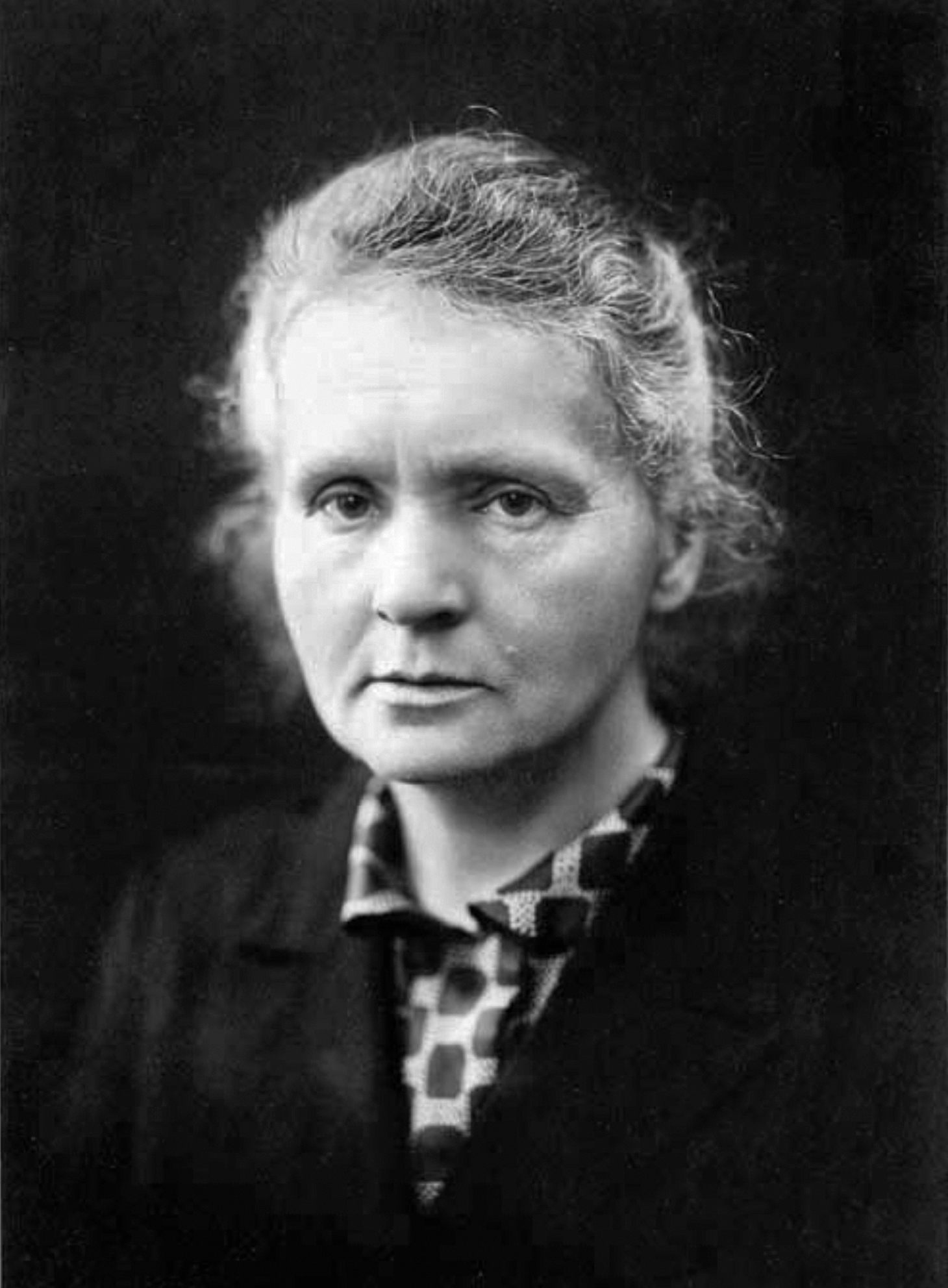
When Marie Curie began studying radioactivity, she did not have access to elegant laboratories or generous funding. She worked in a converted shed, stirring heavy containers of pitchblende by hand, isolating tiny traces of radium through painstaking chemical processes that demanded both precision and endurance.
Her work led to the discovery of polonium and radium, fundamentally altering how scientists understood atomic structure. At a time when the very idea of atoms was still evolving, she helped uncover forces within matter that were invisible to the eye but powerful beyond imagination.
She became the first woman to win a Nobel Prize and remains the only person to receive Nobel Prizes in two different scientific fields, Physics and Chemistry. Yet her legacy goes beyond academic recognition. During World War I, she developed mobile X-ray units that were used on battlefields to save countless lives, proving that science must serve humanity.
Marie Curie once said nothing in life is to be feared, only understood. Through understanding, she changed both science and medicine forever.
Rosalind Franklin: The Invisible Architect of DNA

Rosalind Franklin was a meticulous scientist. Her approach was careful, data-driven, and uncompromising in its demand for accuracy. While working at King’s College London, she mastered X-ray diffraction techniques to photograph molecular structures.
One of those images, famously known as Photo 51, revealed the distinctive X-shaped pattern that indicated DNA’s double-helix structure. That image became the crucial piece of evidence that allowed the final model of DNA to be constructed.
But Franklin’s work extended far beyond DNA. She made significant contributions to understanding viruses, including research on the tobacco mosaic virus and polio virus. Her scientific rigor set standards that modern structural biology continues to follow.
Her story is not only about what she discovered; it is about the importance of credit, ethics, and integrity in scientific collaboration.
Katherine Johnson: The Mathematician Who Took Humans to Space

Katherine Johnson’s brilliance lay in her extraordinary ability to visualize numbers in motion. Long before digital computers became reliable, NASA depended on human mathematicians to compute flight trajectories, reentry coordinates, and orbital mechanics.
Johnson calculated the precise path for Alan Shepard’s spaceflight and later verified the trajectory for John Glenn’s orbit around Earth. Glenn trusted her calculations so deeply that he asked for her manual verification before launch.
Working in an environment shaped by both racial segregation and gender discrimination, she navigated barriers that had nothing to do with mathematics. Yet she remained focused on the work, letting accuracy speak for itself.
Her contributions laid foundations for the Apollo missions and future space exploration. In many ways, her calculations expanded not just America’s reach into space, but humanity’s confidence in its own ambition.
Janaki Ammal: India’s Quiet Botanical Pioneer

E.K. Janaki Ammal was one of India’s most distinguished botanists and cytogeneticists. At a time when scientific research in colonial India was often dominated by Western scholars, she emerged as a powerful intellectual force in plant genetics.
Her work in cytogenetics helped improve sugarcane varieties, contributing significantly to India’s agricultural productivity. She studied chromosome numbers and hybridization in plants, laying the groundwork for modern plant breeding techniques.
After working at the Royal Horticultural Society in the United Kingdom, she returned to India and played a key role in developing botanical research institutions. She was also deeply committed to biodiversity conservation and the preservation of indigenous plant species.
Janaki Ammal’s work quietly transformed agriculture, proving that scientific excellence thrives wherever dedication meets opportunity.
Chien-Shiung Wu: The Experiment That Shook Physics
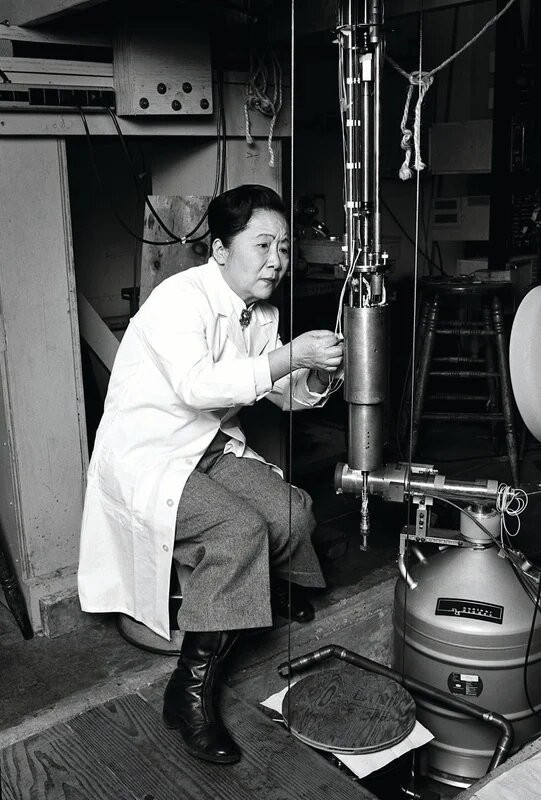
Chien-Shiung Wu was one of the most respected experimental physicists of the twentieth century. Her expertise in beta decay experiments was widely acknowledged, and when theoretical physicists proposed questioning the law of parity conservation, it was Wu who was trusted to test it.
Her meticulous experiment proved that parity conservation did not hold true in weak nuclear interactions, overturning a principle that physicists had long considered fundamental. The discovery reshaped particle physics.
Despite her essential role, the Nobel Prize was awarded to the theorists who proposed the idea rather than the scientist who experimentally confirmed it.
Wu continued to lead groundbreaking research and mentor generations of physicists. Her legacy stands as both a triumph of scientific clarity and a reminder that recognition does not always align with contribution.
The Legacy Continues
These women were not exceptions; they were proof.
Proof that curiosity persists, even when recognition does not. That brilliance does not depend on permission. That discovery belongs to anyone bold enough to pursue it.
The world we live in today is shaped by their courage.